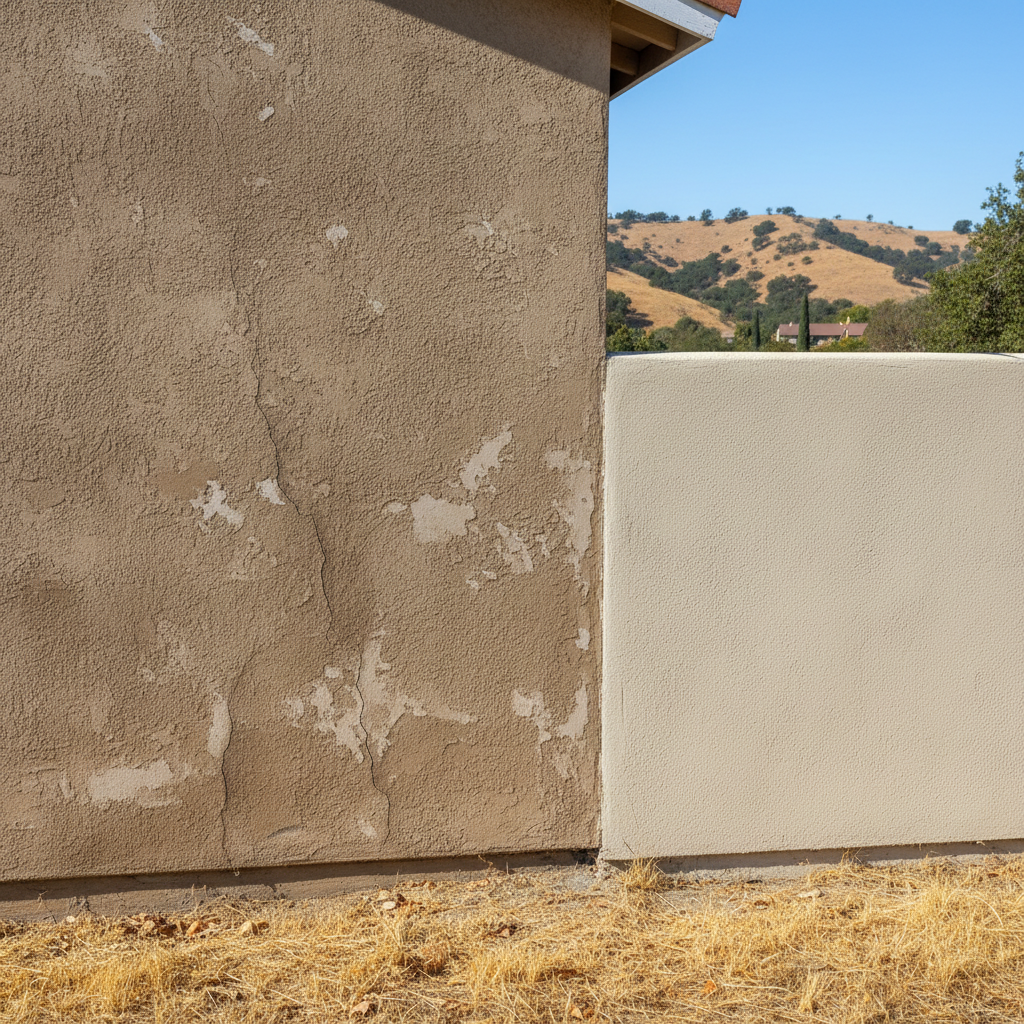
Patching Stucco: The Quick Fix
Alright, let's talk about stucco repair for a minute. You've got a crack, maybe a ding, or some water damage from that sprinkler head hitting the wall for too long. Your first thought probably jumps to, "Can I just patch this thing?" And honestly, a lot of the time, yeah, you can. Patching is exactly what it sounds like: we're fixing a specific, localized bit of damage.
Cost & Time
This is usually your cheapest and quickest option. If it's just a small section, say a few square feet, we can get in there, prep the area, apply new stucco, and match the texture as best we can. It uses less material, less labor. For minor cracks or small impact damage, it's definitely the way to go to keep things from getting worse. You're looking at a few hundred bucks for a small job, maybe a bit more if it's tricky, and it's often done in a day or two. Pretty fast, right?
Durability & Appearance
Now, here's the catch with patching. While the repaired spot itself will be durable, the biggest challenge is getting a perfect match. Stucco ages, you know? The color fades, the texture weathers. Even if we use the exact same mix, the new patch will often look a little different from the surrounding older stucco. It's kind of like putting a fresh piece of fabric on an old, faded couch. You'll probably see the seam. For some folks, that's fine; they just want the structural integrity back. For others, that visible patch can be a real eyesore, especially if it's on a prominent wall. If you've got a home in, say, the Wildwood area with that classic fine-sand finish, a patch can stick out like a sore thumb if it's not done by someone who really knows their stuff.
Maintenance
Once it's patched, you treat it like the rest of your stucco. Keep an eye on it, make sure no new cracks form around the edges. It doesn't really add any extra maintenance beyond what you're already doing.
Resurfacing Stucco: The Full Refresh
Okay, so what if patching isn't cutting it anymore? Maybe you've got cracks all over, or the stucco just looks tired and dated, or you've got so many patches your house looks like a checkerboard. That's when we start talking about resurfacing. This isn't just fixing a spot; it's putting a whole new layer of stucco over your existing exterior. Think of it as a facelift for your entire home.
Cost & Time
Resurfacing is a bigger project, no two ways about it. It involves more material, more labor, and takes longer. We're talking weeks, not days, depending on the size of your house. The cost is significantly higher than patching, often several thousand dollars or more, because we're essentially re-stuccoing the whole place. But you are getting a brand-new, uniform finish.
Durability & Appearance
This is where resurfacing really shines. You get a completely consistent look and color across your entire home. No mismatched patches, no faded spots. It looks fresh, new, and boosts your curb appeal big time. A good resurface can add years of life to your stucco and make your house look decades younger. Plus, it adds another layer of protection to your home's exterior, which is always a good thing, especially with our hot, dry summers and occasional wet winters here in Thousand Oaks.
Maintenance
After a full resurface, your maintenance routine essentially resets. You've got a fresh surface, so you'll want to keep it clean and address any new issues that pop up down the road, just like you would with brand new stucco.
Which One Should You Choose?
So, how do you decide between these two? Here's my take, based on years of seeing what works and what doesn't for homes right here in Thousand Oaks:
If you have a few small, isolated cracks or dings: Patching is probably your best bet. It's cost-effective and gets the job done without a huge disruption. Just be prepared for a potential slight color or texture difference.
If your stucco is showing widespread cracking, fading, or has multiple previous repairs: You're likely better off going with a full resurface. It's a bigger investment upfront, sure, but it gives you a uniform, beautiful, and durable finish that will last a long time and significantly improve your home's appearance and value. Trying to patch a house that's got issues everywhere is like putting a band-aid on a broken arm — it just doesn't make sense in the long run.
If you're planning to sell your home soon: Consider the impact on curb appeal. A freshly resurfaced home will always show better than one with visible patches. If you're staying put, think about how much that uniform look really matters to you.
Ultimately, the best way to figure it out is to have someone take a look. We at Thousand Oaks Stucco & Plastering can come out, assess your stucco, and give you an honest opinion on what we think will work best for your situation and your budget. Sometimes, a well-done patch is all you need. Other times, a full refresh is the smart move. Don't guess; get an expert to check it out.