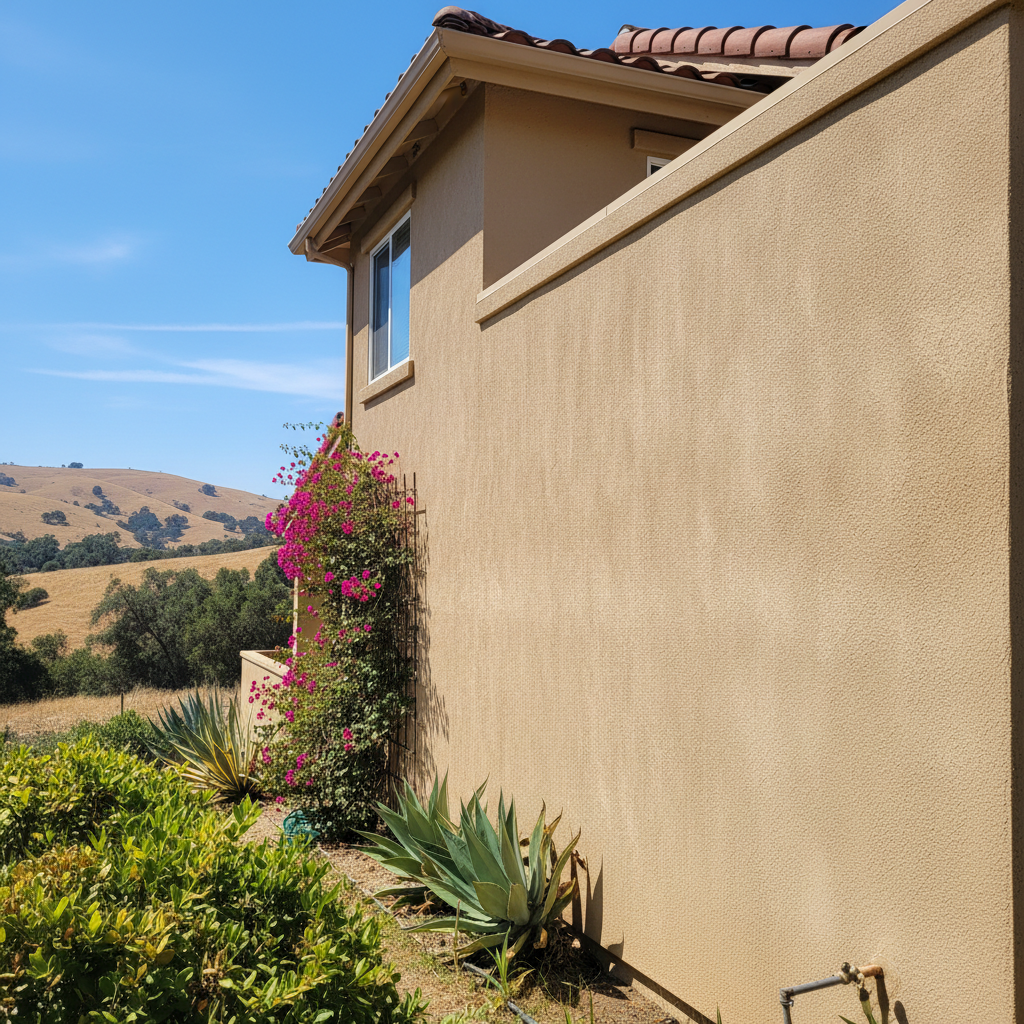
Ever notice how some stucco homes around Thousand Oaks still look sharp after twenty years while others are cracking up down near Los Robles? Routine care is very important. Thousand Oaks experiences some brutal weather swings, from baking triple-digit summer days to sudden downpours in the winter, and your exterior feels every bit of it. If you want to skip costly repairs down the road, you have to stay ahead of the weather.
Regular maintenance does not mean spending every weekend on a ladder. Start by walking your property twice a year. Look at the walls facing south and west because they take the heaviest beating from the sun. Grab a garden hose and give the walls a gentle rinse to clear away dust, spider webs, and the fine layer of wind soot that settles into the texture. Keep your sprinklers adjusted so they are not constantly soaking the base of your walls. Constant moisture sitting against the weep screed is an open invitation for trouble.
Spotting the Warning Signs Early
Hairline cracks happen. When wood framing expands and contracts in the heat, small fissures show up in the finish coat. They are not the end of the world if you catch them early. But once a crack gets wider than a credit card, or you see spider-web cracking spreading across a whole panel, you are dealing with structural movement issues or water intrusion. Keep an eye out for bubbling paint or a powdery white residue called efflorescence, which is that white powdery substance you see on masonry. That white crust means water is moving through your wall and pushing salts out to the surface.
Stains running down from window corners or rooflines usually mean your flashings are failing. Ignore those streaks, and you will soon be dealing with rotted lath behind the finish.
Extending the Life of Your Exterior
You can dramatically stretch out the years between major coating jobs by keeping up with small fixes. Seal minor cracks right away using a high-grade elastomeric caulk that matches your texture. If you are painting, make sure you are using a breathable, 100% acrylic exterior paint designed for masonry. Using cheap hardware store paint on stucco traps moisture inside the wall, causing it to peel and blister when the sun hits it.
Thousand Oaks Stucco & Plastering sees plenty of homes where a simple patch job could have prevented a massive tear-out if it had been handled five years earlier.
When to Call a Professional
Some jobs go beyond a tube of caulk and a putty knife. If you notice large sections of stucco sounding hollow when you tap them, or chunks starting to break off near the foundation, you need a professional to look at it. Hollow spots mean the finish has delaminated from the wire mesh. Patching the surface will not fix that because the bond underneath is completely gone. Call in someone who knows local construction to check the lath and framing before minor damage turns into a full-scale wall replacement project.